Fes: everything YouTube's best creators show you — sorted
12 videos across 5 topics, ranked by what's actually worth your time.
Fes el-Bali is routinely described as the world’s largest surviving medieval city, and the description is accurate enough to be useful as orientation: the medina has not been restructured since the 13th century, which means it operates on a pre-automotive logic of narrow foot passages, no street addresses in the western sense, and a density of craft production and religious institutions that has no direct equivalent in Europe. The practical consequence is that a phone map will get you lost in a way that is simultaneously disorienting and, for most visitors, the point of the journey. A local guide for the first half-day costs around 300–500 dirhams and removes the navigation load enough to let the place register properly; after that, getting lost is easier to absorb once you have a mental skeleton of the major landmarks.

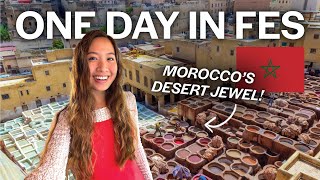
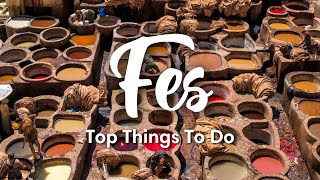
The Chouara tanneries are the most-photographed site in Fes and among the most distinctive working industries still visible in any medieval city. The dye vats — circular stone pots filled with saffron yellow, poppy red, and indigo blue pigments — are set into the ground in a honeycomb pattern and best viewed from the balconies of the surrounding leather shops, which grant free access in exchange for exposure to the merchandise. The smell of the lime and pigeon-dung soaking pits is considerable, and the shops will offer sprigs of mint at the entrance. The Bou Inania Madrasa, a 14th-century Quranic school with carved stucco walls and geometric cedar woodwork, is the finest interior in the medina and costs 70 dirhams to enter; the Medersa el-Attarine, adjacent to the Kairaouine mosque, is smaller but equally precise. Neither can be rushed, and the late-afternoon light on the stucco reads better than midday.
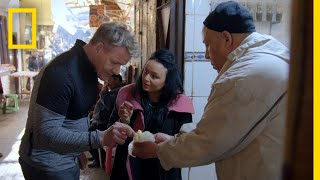
The food in Fes is kitchen-driven rather than street-facing in the way Marrakech’s Jemaa el-Fnaa is. Pastilla — a flaky warqa pastry pie filled with pigeon or chicken, almonds, cinnamon, and icing sugar — is the city’s signature dish and is best eaten at a restaurant rather than a stall; prices at a decent riad restaurant run 80–130 dirhams a portion. Harira soup, made with tomato, lentils, chickpeas, and coriander, is the standard breakfast and late-evening option at around 10–15 dirhams a bowl. The medina bakeries are worth finding: each neighbourhood has a communal oven where locals bring their raw dough to be baked, and a round of khobz bread costs next to nothing. Fes rewards a three-night minimum; visitors who arrive on a day trip from Marrakech see the tanneries and leave, which is accurate but fundamentally incomplete.
Architecture
All 1 architecture videos →
Day Trips
All 5 day trips videos →
Itinerary
All 3 itinerary videos →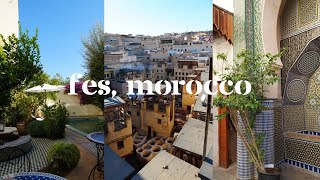
Museums
All 2 museums videos →
Street Food
All 1 street food videos →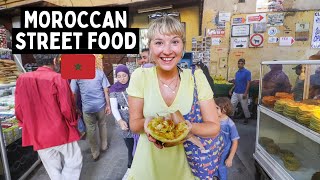
Other cities in Morocco
Turn these videos into a Fes day-by-day plan.
Plan my days in Fes →