Mexico City: everything YouTube's best creators show you — sorted
72 videos across 8 topics, ranked by what's actually worth your time.
Mexico City refuses the framing most large capitals invite — it is not a city you pass through on the way somewhere else, and it is not one neighbourhood with a tourist district bolted on. At somewhere north of 20 million people spread across a high-altitude basin, CDMX is more accurately understood as a loose confederation of distinct villages that happen to share a metro system, and the practical consequence of that scale is that where you base yourself determines what version of the city you experience. Creators who’ve spent real time here make the case consistently: a week feels short, and a long weekend mostly teaches you what you wish you’d had more time for.

The neighbourhood question is the first decision that shapes everything else. Centro Histórico — the Zócalo, the Palacio de Bellas Artes, the ruins of Tenochtitlán embedded beneath colonial-era foundations — is architecturally the most loaded part of the city, but it is not the best base for most visitors. Roma Norte and Condesa have emerged as the practical choice: walkable, tree-lined, with a density of coffee shops, taquerías, and mezcal bars that makes an unplanned afternoon genuinely productive. Diego Luna’s personal guide to CDMX singles out both neighbourhoods for exactly this quality — the sense that the city is operating around you rather than being performed at you. Polanco, further north and west, plays a different register: it is where Quintonil and Pujol hold their Michelin recognition, where the Museo Soumaya sits as a private collection made public, and where the design hotels price accordingly. Coyoacán, in the south, is quieter and more residential — the Frida Kahlo Museum (Casa Azul) anchors most visits, but the weekend market at Mercado de Artesanías and the coffee culture around the central plaza reward an extended afternoon rather than a two-hour hit-and-run.
Food is the primary argument for Mexico City, and the honest framing is that the gap between street eating and fine dining here is narrower than almost anywhere else. A taco al pastor at El Huequito in Centro, or a bowl of pozole rojo from the Mercado de San Juan, competes seriously with anything in a white-tablecloth room. The Anthony Bourdain No Reservations episode filmed here remains one of the most instructive single documents on how to eat in this city: it traces a logic of markets-first, then taquerías, then pulquerías, that holds up as a planning framework in 2026. The cuisine and street food pages in this section work through the specifics — which markets to prioritise, how to navigate the menu at a taquería without defaulting to the obvious choices, and where the quality-to-price ratio is genuinely exceptional rather than just acceptable.
Timing matters in ways that differ from European capitals. March through May is the consensus sweet spot — cool enough to walk all day, dry, and before the summer rains that arrive in June and run through October. The city’s altitude (2,240 metres) catches first-time visitors off-guard regardless of season: give yourself a day before committing to a full itinerary, and drink more water than feels necessary. Getting around is easier than the city’s reputation suggests — the metro is extensive, cheap, and reliable outside of peak hours, and the Metrobús runs along Insurgentes through the spine of Roma and Condesa. The common tourist mistake identified repeatedly across multiple guides is over-relying on ride-share apps in traffic-heavy corridors during rush hour; the metro resolves the same journey in a third of the time at a fraction of the cost. The budget tips section covers this in more detail alongside ATM strategy and tipping norms.
The skip-this advice worth taking explicitly: the hop-on-hop-off bus, which covers a version of the city that locals do not live in; and Xochimilco on a weekend, when the trajineras are crowded and the experience becomes a bottleneck rather than an escape. The day trips section covers the genuine alternatives within two hours of CDMX — Teotihuacán at sunrise before the tour buses arrive, the silver city of Taxco to the south, and the town of Tepoztlán for a quieter version of the Valley of Mexico. The museums page works through the Museo Nacional de Antropología — which requires more than the one hour most itineraries allocate — alongside the Kahlo and Trotsky museums in Coyoacán. The videos below collectively cover more ground than any single itinerary can compress; the five-day guide by MHQYdfiaxPk is the most structured starting point for sequencing the neighbourhoods in an order that makes geographic sense.
Architecture
All 1 architecture videos →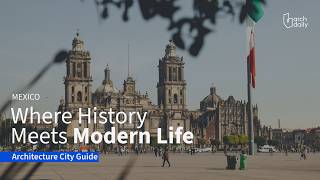
Beaches
All 1 beaches videos →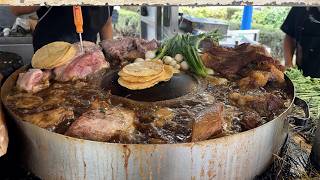
Budget Tips
All 1 budget tips videos →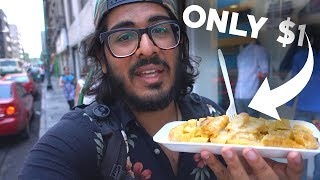
Cuisine
All 5 cuisine videos →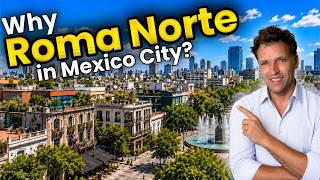

Day Trips
All 7 day trips videos →

![Best Things to Do in MEXICO CITY [TOP 10] #mexicocity #cdmx #mexicotravel](https://img.youtube.com/vi/M-L0WF3diXM/mqdefault.jpg)
Itinerary
All 50 itinerary videos →

Museums
All 2 museums videos →
Street Food
All 5 street food videos →

Other cities in Mexico
Turn these videos into a Mexico City day-by-day plan.
Plan my days in Mexico City →