🇲🇽The complete Mexico watch-list
320 curated videos. One plan before you go.
Cancun
57 videos
Beaches · Cuisine · Day Trips
Guadalajara
5 videos
Cuisine · Hidden Gems · Itinerary
Los Cabos
9 videos
Day Trips · Hidden Gems · Itinerary
Merida
6 videos
Beaches · Cuisine · Day Trips
Mexico City
72 videos
Architecture · Beaches · Budget Tips
Mexico Highlights
156 videos
Beaches · Budget Tips · Cuisine
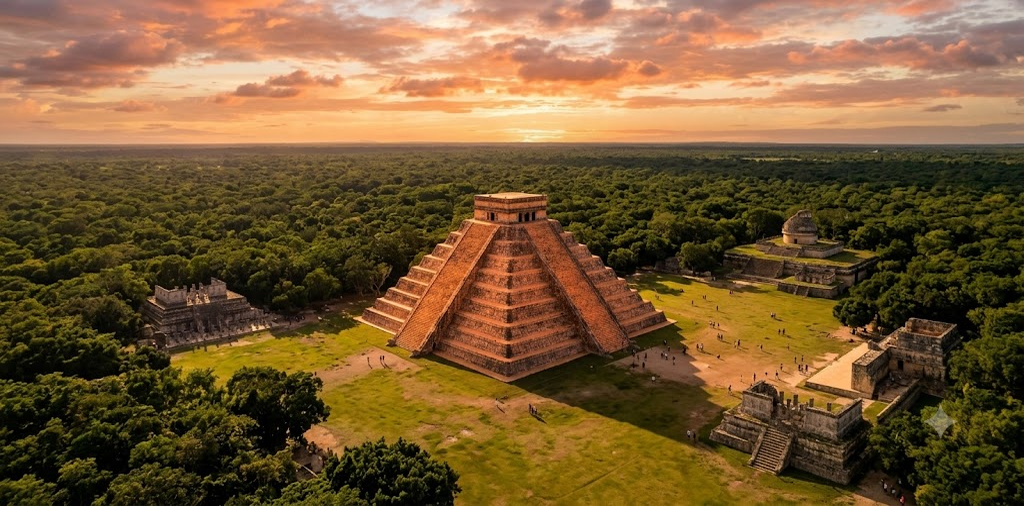
Most videosThe standard Cancún-beach-and-done trip is not wrong — it simply rewards the traveller who treats the Caribbean coast as one of several distinct Mexicos rather than the only one [via One Country Five Feels]. The country runs from highland plateaus at 2,200 metres, where Mexico City sits alongside pre-colonial pyramids and a $1.50 metro, to Pacific surf towns, Gulf-facing jungle, Yucatán limestone sinkholes, and Baja’s bone-dry desert. Oaxaca operates as an indigenous cultural nucleus with its own cuisine, language traditions, and mezcal production that diverge sharply from the capital’s. Guadalajara invented mariachi and tequila and still lives both. Los Cabos points toward the Pacific as a high-spend resort alternative to the Caribbean; Cancun anchors the east with a Hotel Zone that functions as its own self-contained ecosystem, separate from the Mexico that lies an hour inland. Understanding the regional grammar before departure matters here more than in most countries.
The practical travel windows split by geography. Highland cities — Mexico City, Oaxaca, Guadalajara — sit at elevation and remain mild year-round; February through May delivers reliably dry skies and temperatures that plateau near 25°C without requiring air conditioning [via Top 15 Places]. The Caribbean coast runs hot and humid from June through October, with hurricane risk peaking in September; most creators converge on December through April as the optimal window, when sea temperatures hold and resort pricing softens outside Christmas and Semana Santa. Baja and Los Cabos follow the Pacific’s more forgiving rhythm — October to May for whale sharks near La Paz and stable beach weather without the Yucatán humidity. Note that 2026 introduced stricter entry procedures for some nationalities [via Tough New Border Rules]: confirm visa status, proof of onward travel, and financial evidence requirements before booking, as travellers have been denied boarding for documentation that was previously treated as optional.
Mexico’s food map is one of UNESCO’s recognised intangible cultural heritages, and the regional specificity is the entire point. Oaxaca’s mole negro — a sauce of dried chillies, chocolate, and up to thirty ingredients slow-built over two days — is the dish that defines what “cuisine” means at this level [via Why Everyone’s Traveling to Oaxaca]. Yucatán’s cochinita pibil involves annatto-and-citrus-marinated pork slow-cooked in a pit oven, then shredded and served in soft corn tortillas; ordering it at a Mérida market before 8 a.m. is the correct local register. In Mexico City, Anthony Bourdain’s episode at Contramar — the tuna tostada, the whole grilled fish painted with two sauces — remains the reference benchmark for what the capital’s food culture actually looks like at its ceiling [via Best Eats Mexico City]. Tacos al pastor off a trompo, tlayudas in Oaxaca, and birria de res in Guadalajara form the three-dish trifecta worth organising stops around.
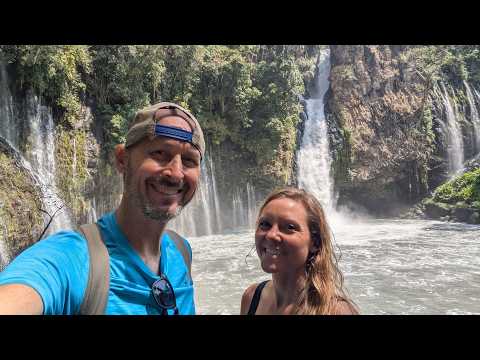 Hiking and Walking through Uruapan, Michoacan: Things to Do
![सर्वश्रेष्ठ eSIM मेक्सिको: 5जी स्पीड टेस्ट और हिडन ट्रैप [समीक्षा] 🇲🇽 मेक्सिको का सर्वश्रेष्ठ eSIM](https://img.youtube.com/vi/GqIelGBeVlg/hqdefault.jpg) सर्वश्रेष्ठ eSIM मेक्सिको: 5जी स्पीड टेस्ट और हिडन ट्रैप [समीक्षा] 🇲🇽 …
सर्वश्रेष्ठ eSIM मेक्सिको: 5जी स्पीड टेस्ट और हिडन ट्रैप [समीक्षा] 🇲🇽 …
 4K 0335 Mex Bus Travel Guide Experience Mexico's Diverse …
Two weeks is the practical minimum for any trip that reaches three distinct regions [via Top 15 Places]. A common first-timer error is booking Cancún beaches plus Mexico City in sequence and calling it done — transit between them costs a full day via a congested hub airport, and neither location gives you a readable impression of the other. A more efficient skeleton: four days in Mexico City for museums, colonia-level neighbourhood exploration, and elevated food; three days in Oaxaca for the Benito Juárez market, Monte Albán, and mezcal education; three days on the Yucatán Peninsula split between Cancun’s beach infrastructure and Tulum’s cenotes; two nights in Los Cabos or Puerto Vallarta for a Pacific bookend. The detailed five-day Mexico City sequence [via 5 Days in Mexico City] lays out a day-by-day plan that avoids the most consistent mistake in that city — over-scheduling a place that punishes rush and rewards drift. On safety: city-level advisories are considerably more granular than country-level headlines suggest, and tourist corridors in Oaxaca, Cancún’s Zona Hotelera, and central Mexico City carry ratings consistent with Southern European cities [via Is Cancun Safe 2026].
The video corpus divides across five practical registers. The entry and logistics layer — border rules, money handling, SIM cards, and tipping conventions — is covered by [via Tough New Border Rules], [via Practical Mexico Travel Tips], and [via What Not To Do in Mexico]; these belong in the reading list before any booking. The Mexico City layer runs deep, with more than fifteen dedicated guides ranging from Condé Nast Traveler’s actor-led neighbourhood walk through Colonia Roma and Condesa [via Diego Luna Mexico City] to granular block-by-block breakdowns of the historic centre [via Mexico City Best Things 4K]. The coastal layer addresses Cancun, Tulum, Playa del Carmen, and Isla Mujeres in enough parallel detail that direct comparisons are available [via Tulum vs Playa del Carmen]. Cultural depth anchors in Oaxaca [via Best Things Oaxaca 2026] and in the 2026 World Cup context building around Estadio Azteca [via World Cup Azteca Guide]. What the set provides that printed guidebooks don’t is real-time 2026 granularity — updated entry procedures, honest neighbourhood-level safety assessments, and crowd benchmarks at specific sites across all seasons.
More destinations
Want a Mexico itinerary built around what you've watched?
Plan my Mexico trip →