🇫🇷The complete France watch-list
327 curated videos. One plan before you go.
Flights to France
videos
France eSIM Guide
videos
Travel Insurance for France
videos
Bordeaux
5 videos
Cuisine · Itinerary
Loire Valley
2 videos
Itinerary
Lyon
7 videos
Cuisine · Itinerary
The standard argument for France is that it is a single, coherent destination best understood through Paris. The better argument is that France is at least six countries sharing a passport. The north and west — Normandy, Brittany — are oceanic, flat, and Celtic in feel. The south and east hit walls of rock: the Alps, the Pyrenees, the Provençal limestone. The food, the accents, the pace, the wine all shift dramatically as you move between them. The practical consequence is that a trip treating France as one place is a trip that will confuse itself. A trip that commits to one or two regions and understands what each one is for will not.
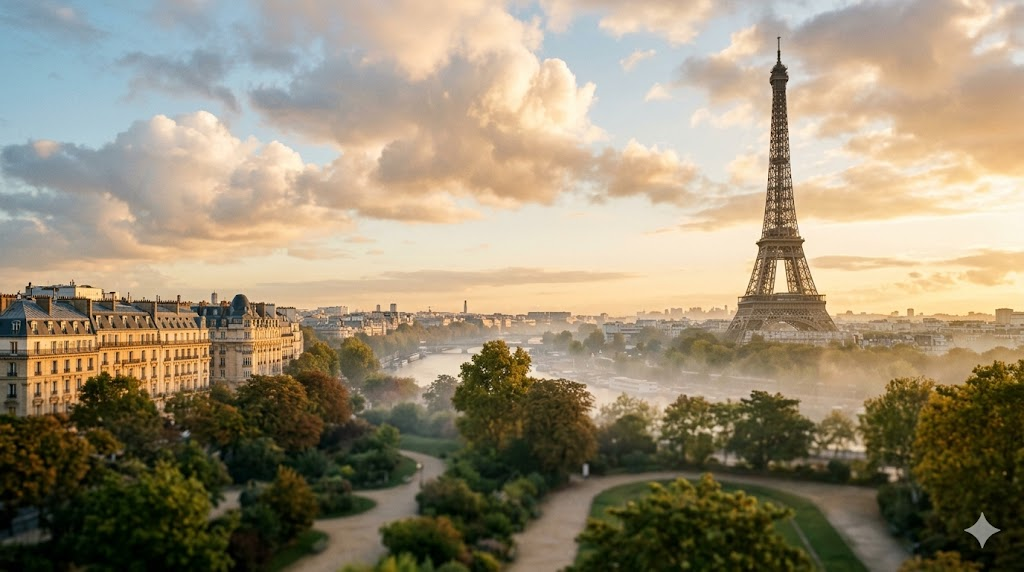
Paris concentrates most first-timer traffic, and for fair reason: it is the densest single city in Western Europe for museums, cuisine, and architectural drama. But the corpus is consistent on one point — locals describe it as emphatically not France, and they are correct in a useful sense. Lyon, two hours south by TGV, is the country’s acknowledged gastronomic capital. The traditional bouchon restaurants there serve a register of food that Paris cannot replicate. Directly south again, Provence divides into lavender plateau, limestone hill villages, and the coastal calanques near Marseille. The Côte d’Azur — running east from Nice — has a different energy entirely: Mediterranean, port-inflected, with Italian traces in the food and architecture of Nice’s old town. On the Atlantic coast, Bordeaux organises itself around over 6,000 vineyards and a UNESCO-listed stone city centre along the Garonne. Strasbourg in the east is a distinct case: it has changed nationality between France and Germany four times since 1870, and the half-timbered architecture, the tarte flambée, the Rieslings, and the Christmas market dating to 1570 all carry that dual inheritance. The Loire Valley threads between Paris and the Atlantic coast — over 300 châteaux along the longest river in France, with cycling routes and wine appellations running alongside the architecture.
April into May and September into October are the windows most creators converge on. Both avoid French school holiday saturation without sacrificing weather reliability. Spring brings wisteria over Parisian boulevards and quieter provincial towns; September means the harvest season in Bordeaux, crowds thinning on the Riviera, and the Luberon lavender fading gracefully rather than disappearing. Summer requires a specific warning: the weekends in July and August locally called “Black Saturday” see the entire domestic travelling population move simultaneously. Roads, trains, and coastal towns become genuinely difficult to navigate. One creator describes the southern coast in August as peak season in a way that affects every aspect of travel quality. That said, mid-June to late July is the window for Provence’s lavender — the fields near Valensole peak roughly in early July, and a week either side risks catching them before bloom or after the harvest cut. Winter is underrated outside the ski season. Strasbourg’s Christmas market is the oldest in Europe and draws visitors specifically for December. Paris in January is cold but not hostile, and the major attractions are accessible without the summer queue multiplication.
 Denmark🇩🇰➡️Germany🇩🇪➡️Netherlands🇳🇱➡️Belgium🇧🇪➡️France🇫🇷📌💪🏾. 🤗 …
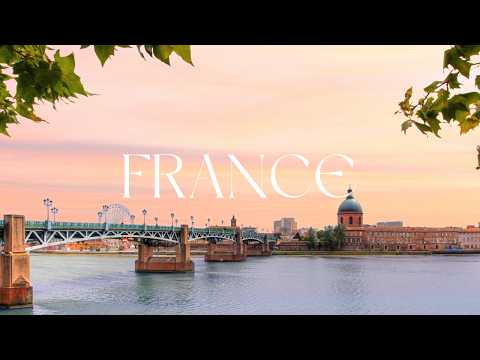 “10 Best Places to Visit in France 🇫🇷 | Ultimate Travel Guide 2026”
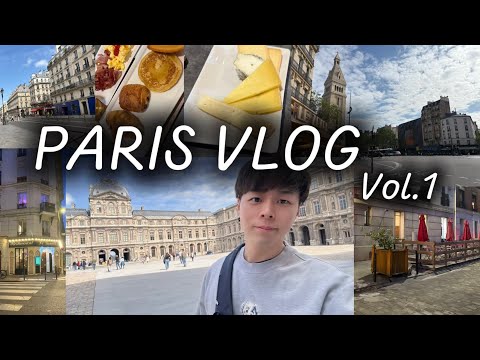 【パリ旅行完全版🇫🇷】フランスVlog7泊8日の旅✈️Vol.1
France does not have a cuisine — it has a network of regional ones with almost no overlap. The “12 Regions of France EXPLAINED” video makes this explicit: the north eats cream and apples, the east eats choucroute and pretzels with Riesling, Lyon eats bouchon fare with quenelle and andouillette, Provence and the Riviera eat olive oil and ratatouille and socca, and Paris eats everything imported from all of them plus the world. Any bakery visit should begin with a croissant and a pain au chocolat — multiple creators note that the gap between a boulangerie-made croissant and anything outside France is meaningful, and that the word boulangerie (rather than just “pain”) signals fresh bread made on-site. Lyon’s bouchons — packed, noisy, cloth-tablecloth restaurants — represent a style of eating that has no direct equivalent elsewhere: the salade Lyonnaise with its poached egg and pork belly lardons, followed by saucisson de Lyon, pink pralines, and a praluline brioche for dessert. Bordeaux’s food identity runs through duck confit and the canelé, the small rum-and-vanilla pastry one creator calls the quintessential Bordelais take-away. Nice’s food speaks a different language entirely: socca (chickpea pancake) from a market stall for around €5 or €6, pan bagnat at lunchtime, and the tourte de blette that is sweet, savoury, and uniquely Niçois.
Two weeks is the minimum that allows France to make sense as a journey rather than a highlight reel. The “France Travel Guide 2026” video argues this directly: the TGV connects Paris to Marseille in three hours, a journey that takes nearly eight hours by car, which means the country’s north-to-south axis is genuinely traversable in a single trip. A working 14-day skeleton runs: three days Paris, one day Versailles, a train south to Lyon for two nights, then on to either Provence or the Riviera for three nights, and back north via Bordeaux (two nights) or Strasbourg (two nights). The 10-day version forces a choice between the Atlantic coast and the Mediterranean coast; do not attempt both. Skip driving in Paris — the metro is the correct tool, single tickets at roughly €2.10 each. Outside Paris, a car becomes genuinely useful: Normandy’s D-Day beaches and Provence’s hill villages are both difficult to access at pace by public transport alone. Renting from a train station in Caen or Avignon rather than driving from Paris is the approach multiple creators recommend. French tolls are consistently flagged as expensive, and car rental costs are high — budget for these explicitly if driving is part of the plan.
The France corpus here runs across the full geographic range: Paris tips and itinerary videos, Lyon food tours, a Provence deep-dive with Luberon village sequences, Côte d’Azur multi-day itineraries, Bordeaux wine visits, Strasbourg and Alsace explorations, Normandy D-Day beach guides, and Loire Valley château routes. The “France Travel Guide 2026” conversation-format video is the single most useful starting point — it addresses the diversity question (Paris is not France), the timing traps, and the regional food logic in one sitting, and is the video to watch before booking anything. The food-specific videos — particularly the Lyon food tour and the Nice food specialties video — give you the granular local knowledge that country-level itinerary videos tend to skip. Pair the regional overview videos with one food video for each destination and you have the map and the meal handled before you arrive.
Marseille
6 videos
Cuisine · Itinerary
Recommended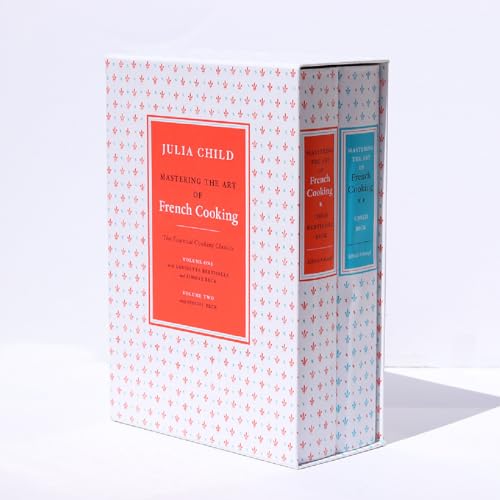 Mastering the Art of French Cooking
Check price on Amazon AU →
Mastering the Art of French Cooking
Check price on Amazon AU →
Nice
49 videos
Cuisine · Itinerary
Normandy
3 videos
Highlights · Itinerary
Paris
232 videos
Cuisine · Day Trips · Highlights
Provence
13 videos
Cuisine · Highlights · Itinerary
Strasbourg
10 videos
Highlights · Itinerary
More destinations
Want a France itinerary built around what you've watched?
Plan my France trip →