🇪🇸The complete Spain watch-list
365 curated videos. One plan before you go.
Mallorca
16 videos
Beaches · Cuisine · Day Trips
Spain Highlights
218 videos
Architecture · Beaches · Budget Tips
Most videosBarcelona
27 videos
Day Trips · Itinerary · Traditional Culture
Bilbao
25 videos
Architecture · Art & Museums · Cuisine
Córdoba
24 videos
Architecture · Art & Museums · Cuisine
Granada
20 videos
Day Trips · Itinerary · Architecture
The standard argument for Spain is that it is a sun and sangria destination best entered through Barcelona or Madrid and experienced through a checklist of monuments. The better argument is that Spain is at least five countries sharing a flag, and that a trip treating them as interchangeable will confuse itself completely. Andalucía — the south — is Moorish architecture, fierce heat, flamenco, and the late-dinner culture that means nothing opens until 10 p.m. Catalonia is a separate linguistic nation with its own food traditions, an independence movement with genuine political weight, and a coastline nothing like the Costa del Sol. The Basque Country in the north operates on a different planet: Michelin stars per capita higher than almost anywhere in the world, pintxos bars that take the craft seriously, and a coast of crashing Atlantic surf rather than Mediterranean flatness. Madrid is not the Spain of any of these — it is a capital built by imperial decree in the centre of a plateau, 650 metres above sea level, cold in winter and brutal in August. Galicia in the far north-west speaks a language closer to Portuguese, eats octopus and empanada rather than paella, and receives more rainfall annually than most of Ireland. A trip that commits to one or two of these regions and understands what each one is for will not confuse itself.
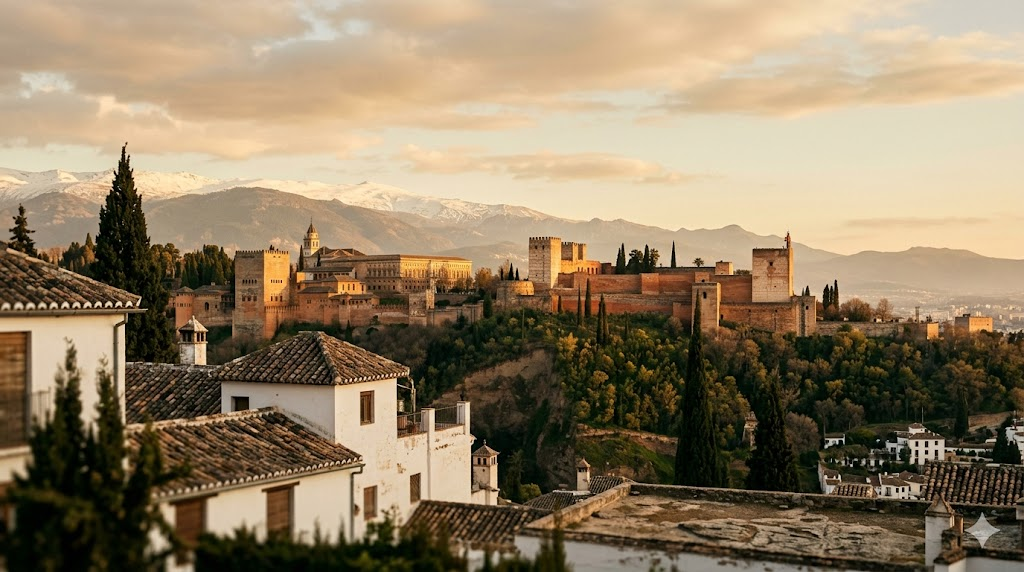
The timing question matters more in Spain than almost anywhere in Europe, because the country’s geography splits so dramatically by climate zone. August is the month most often flagged as a mistake across the corpus. Temperatures in Seville routinely exceed 42°C; the city empties as Spaniards leave for the coast, leaving tourists in heat that makes walking anything more than a few blocks genuinely unpleasant. The same heat applies to Córdoba and Madrid. The coast — Valencia, Málaga, Barcelona — is more survivable but crowded to the point of absurdity. The correct answer for most visitors is shoulder season in both directions. March into June delivers warm-but-not-crushing temperatures in Andalucía (Seville at 22–28°C in May), wildflowers in the countryside, and Holy Week processions in cities like Seville and Granada that are among the most extraordinary public spectacles in Europe. September and October bring the heat down to manageable levels, harvest festivals in wine regions like La Rioja and Ribera del Duero, and beaches that are still swimmable but no longer rammed. The north — Basque Country, Galicia, Cantabria — runs on a different schedule; July and August are actually the correct summer window there, the only months when Atlantic rain reliably retreats.
Budget arithmetic in Spain is more regional than most travellers expect. The Basque Country is expensive: San Sebastián hotel rates in July can exceed €200 a night for a mid-range room, and a pintxos evening with wine per person will run €30–50 if done properly. Barcelona is similarly costly for accommodation, with budget hostels at €30–50 per night and mid-range hotels at €120–200. Madrid sits in the middle: cheaper than Barcelona for beds, excellent-value lunch menus at €12–15 for three courses with wine, but transport and nightlife can add up. Andalucía is the value corridor. In Córdoba you will find excellent mid-range hotels at €60–90 a night; in Granada, budget guesthouses in the Albaicín neighbourhood at €40–70. Seville is more expensive than either but remains below Barcelona. The universal budget multiplier in Spain is lunch: the menú del día — a fixed-price lunch of three courses including bread and a drink — runs €10–15 almost everywhere outside tourist zones, and is the correct way to eat the best food at the best price in any Spanish city.
 - When you're in San Sebastian, it's all about eating pintxos, and …
 【西班牙旅遊】高第以外的建築神人!|聖家堂購票貼士|Barcelona 巴塞隆拿自由行攻略
 >> Golden sunsets paint the skyline of Seville as flamenco rhythms …
The food logic is the thing most first-timers underestimate, and it divides harder by region than almost any country in Europe. The tapas of Andalucía are largely free with your drink in Granada (a serious distinguishing feature — order a beer and receive a plate of food), priced separately in Seville, and structurally different from what happens in the north. Basque pintxos are not tapas: they are small composed plates — often involving seafood, salt cod, spider crab, or Ibérico pork — displayed on bar tops and consumed standing, bar by bar, in circuits locals call txikiteo. San Sebastián’s Old Town is the correct environment to understand this; it functions as a food festival every evening of the week. Valencia claims paella, and is correct to do so — the original dish is a rice, rabbit, and green bean combination made in the Valencia countryside, not seafood, and Valencians are firm on this point. Catalonia has its own food identity: pa amb tomàquet (bread rubbed with tomato), escalivada, and a sauce tradition that draws on the Catalan romesco rather than anything southern. The sobremesa — the extended conversation at table after food is finished — is not Andalucían or Catalan or Basque, it is pan-Spanish, and it is the element of the culture most reliably erased by eating on a tourist schedule. Dinner before 9 p.m. is for tourists; the Spanish dinner hour runs 9–11 p.m. in most cities, later in Andalucía.
The AVE high-speed rail network is the most important transport fact for tourist itineraries, and it is underused. Madrid to Seville takes 2 hours 20 minutes at up to 300 km/h — faster than flying once you account for airports. Madrid to Barcelona runs 2 hours 30 minutes. Seville to Córdoba is 45 minutes. The practical consequence is that an Andalucían circuit by rail — Seville, Córdoba, Granada (the Granada line is slower, around 3 hours from Madrid via Antequera, with a bus connection for the last stretch) — is genuinely feasible without a car. The Renfe Avlo service on the Madrid–Barcelona–Valencia corridor is a low-cost AVE operator that cuts prices significantly if booked early. One consistent warning across the corpus: book AVE tickets two to four weeks in advance. The trains fill, and last-minute prices for the fastest services are steep.
The common mistakes converge on three patterns. First, treating Spain as one country and expecting the culture, food, and pace to be consistent across regions — it is not, and planning as though it were will produce a confusing trip. Second, visiting in August without understanding what that means specifically in inland and southern cities: the heat is not a minor inconvenience but a structural constraint that reshapes the entire day. Third, ignoring the north. The Atlantic coast from San Sebastián through Cantabria to Galicia is among the most beautiful coastline in Europe and receives a fraction of the tourist traffic that the Mediterranean coast does. The Camino de Santiago draws pilgrims, but the non-pilgrim who lands in San Sebastián and works their way along the Basque and Cantabrian coast before ending in Santiago de Compostela is making a serious journey. The corpus on this route is thinner than the south — which is precisely why it is worth flagging here.
The Spain corpus here covers the full regional range: Madrid city guides and day-trip circuits, Barcelona architecture and neighbourhood videos, the Andalucían triangle of Seville, Córdoba and Granada, Valencia food culture and beach access, the Basque pintxos circuit in San Sebastián and Bilbao, and Málaga as the underrated capital of the Costa del Sol. The starting video for any Spain research session is one of the country-overview itinerary videos, which address the regional diversity question and the timing traps in a single sitting. Pair it with one food video for each destination you are considering — the cuisine differences between regions are genuinely that significant — and the trip will make sense before you book.
Madrid
28 videos
Budget Tips · Day Trips · Hidden Gems
Málaga
29 videos
Architecture · Art & Museums · Beaches
San Sebastián
22 videos
Itinerary · Temples · Architecture
Seville
31 videos
Day Trips · Hidden Gems · Itinerary
Valencia
26 videos
Day Trips · Itinerary · Architecture
More destinations
Want a Spain itinerary built around what you've watched?
Plan my Spain trip →