Córdoba: everything YouTube's best creators show you — sorted
24 videos across 6 topics, ranked by what's actually worth your time.
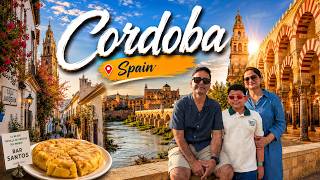
Córdoba’s central argument is a single building, and it is one of the most extraordinary in Europe. The Mezquita-Catedral — the Great Mosque of Córdoba, subsequently converted into a cathedral after the Reconquista — contains 856 columns of jasper, marble, granite, and onyx supporting red-and-white striped double arches in a forest that disorients the eye in a way that photographs do not prepare you for. At its peak in the 10th century, Córdoba was the largest city in Western Europe, the capital of the Umayyad Caliphate, and a centre of scholarship in mathematics, astronomy, and medicine that preserved classical texts that the rest of Europe had lost. The city has been living on that history for a thousand years, and the Mezquita is the concentrated remainder of it. The surrounding Judería (Jewish Quarter) — a labyrinth of whitewashed lanes, patios, and flower-filled courtyards — makes the case for the rest of the day. Spain has an Andalucían triangle; Córdoba is its most architecturally singular point.

Timing matters unusually severely in Córdoba. It holds the record for the highest reliably recorded temperature in Spain — 47.2°C in August 2021 — and the summer heat is not a minor inconvenience but a structural constraint on the visit. March, April, May, and October are the correct months. May specifically is when the Concurso de Patios de Córdoba takes place: a competition in which residents open their private courtyards to the public, and the city’s characteristic patio culture — plants climbing whitewashed walls, fountains, wrought-iron gates — is at its fullest expression. This is a UNESCO Intangible Cultural Heritage event and draws significant crowds; book accommodation in early May well in advance. Spring also brings the Festival de los Patios and the Feria de Mayo in the last week of the month.
The city rewards two full days, though it is also feasible as a day trip from Seville (45 minutes by AVE) or Granada (around 2 hours 20 minutes by bus). Day one: the Mezquita opens at 10 a.m. (€13 general admission; the first-hour morning mass entry is technically free but practically complicated). Arrive at opening and spend two to three hours — the building is large enough that rushing defeats the purpose. The Patio de los Naranjos (courtyard of orange trees) before entering and the mihrab (the prayer niche indicating the direction of Mecca) are the two moments the corpus consistently highlights. The Judería in the afternoon — the Calleja de las Flores (Flower Lane) for the mandatory courtyard photograph; the Sinagoga de Córdoba (one of three surviving medieval synagogues in Spain, entrance €0.30); and the statue of Maimonides, the 12th-century philosopher and physician who was born in Córdoba. Evening tapas in the streets around the Mezquita, where the density of restaurants is high. Day two: the Alcázar de los Reyes Cristianos in the morning (gardens particularly good in spring, €5 entry); the Palacio de Viana in the afternoon for its twelve Renaissance patios (the best single concentration of patio architecture in the city, €10); and a walk across the Roman bridge over the Guadalquivir at sunset.
Córdoba’s food identity is quieter than Seville’s but worth understanding. Salmorejo is a Córdoban invention — the thick, creamy tomato purée topped with hard-boiled egg and jamón that Seville has borrowed and that the rest of Spain has been selling as generic Andalucían food. The correct version is made with very ripe tomatoes, good olive oil, and stale bread, and the consistency should hold a spoon briefly upright. Flamenquín — a roll of pork loin and jamón, crumbed and deep-fried — is the other distinctively Córdoban preparation, found in traditional restaurants rather than tourist menus. The local wine is Montilla-Moriles, a sherry-style fortified wine made without the sea-air aging that gives Jerez sherry its tang — drier, less briny, and worth ordering by the glass.
Hotel price bands: Córdoba is among the cheapest cities in this collection. Mid-range hotels in or near the Judería run €60–95 per night. A good boutique guesthouse with a patio — the most appealing accommodation category in the city — runs €70–120. The city is genuinely compact and walkable from any hotel within 15 minutes of the Mezquita.
The tourist-trap version of Córdoba involves eating at restaurants that have photographs of the Mezquita on the menu, overpaying for salmorejo, and leaving after three hours. The version that works involves two days, a slow walk through the Judería at 8 a.m. before the crowds arrive, a patio visit in May if the dates permit, and the understanding that the Mezquita itself requires time to sit in rather than photograph and leave.
Architecture
All 0 architecture videos →
Art & Museums
All 0 art & museums videos →Cuisine
All 0 cuisine videos →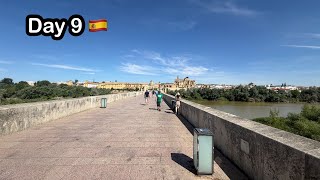

History
All 0 history videos →

Markets
All 0 markets videos →Nightlife
All 0 nightlife videos →Other cities in Spain
Turn these videos into a Córdoba day-by-day plan.
Plan my days in Córdoba →