Barcelona: everything YouTube's best creators show you — sorted
27 videos across 10 topics, ranked by what's actually worth your time.
Barcelona operates on a set of contradictions that most travel guides flatten out. It is a Spanish city that speaks Catalan first and considers itself a nation apart. It has the Sagrada Família — the most visited building in Spain — and also one of the most liveable neighbourhood networks in Europe, where residents cycle to work, shop in covered markets, and eat lunch in restaurant-packed side streets that tourists rarely find. It has a beach that was entirely engineered for the 1992 Olympics and now functions as one of the most popular urban beaches in Europe. And it has Gaudí — a total of seven UNESCO World Heritage sites from a single architect, which is a number that requires a moment to absorb properly. The case against Barcelona is real: it is expensive, crowded in summer, and the area around Las Ramblas has a pickpocket density that the corpus flags consistently. The case for it is that no city in Europe looks like this, and the food alone — Catalan cooking is structurally distinct from anything in the south — justifies the visit. Spain has five or six distinct regional identities; Barcelona is the capital of the most assertively different one.

April into June and September into October are the clear shoulder windows. May delivers temperatures of 19–24°C, beach weather without the August collapse of quality, and the Sant Jordi festival on 23 April — Barcelona’s version of Valentine’s Day, where the city fills with book and rose stalls and the streets become a public party. July and August bring the heat (30–35°C with humidity from the sea), European school-holiday crowds, and accommodation prices that roughly double. September is arguably the best month: water temperature still high from summer, air temperature down to 26–28°C, and the summer visitors largely gone. The Gràcia neighbourhood festival in mid-August is worth knowing about if you are visiting then — it is a locals’ street festival that operates as an antidote to the tourist-season atmosphere.
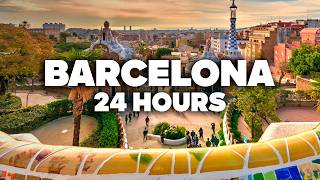
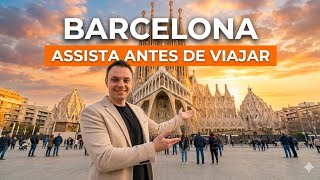
A three-day Barcelona itinerary done properly runs as follows. Day one: Sagrada Família first thing — book tickets online in advance (entrance around €26–36 depending on tower access) and arrive at opening. The stained glass in the nave requires morning light on the Nativity façade side; show up at noon and you miss the point of the building. Walk north-west through Eixample to see Casa Batlló and Casa Milà (La Pedrera) on Passeig de Gràcia — exterior viewing is free; interior tickets run €25–35. Lunch in a side-street restaurant in Eixample, where the menú del día runs €13–16. Day two: Gothic Quarter and El Born in the morning — the Barri Gòtic contains Roman walls, the medieval Plaça del Rei, and the Barcelona Cathedral (free entry most hours); El Born contains the Palau de la Música Catalana (book a tour) and the Santa Maria del Mar church, which is the more architecturally coherent of the two. Barceloneta beach in the afternoon. Dinner in El Born, which has the best concentration of independent Catalan restaurants in the city. Day three: Park Güell in the morning (timed entry required for the monumental zone, around €10), then the Montjuïc hill in the afternoon — the MNAC museum for Romanesque art, the Fundació Joan Miró, and the castle with views across the city and port.
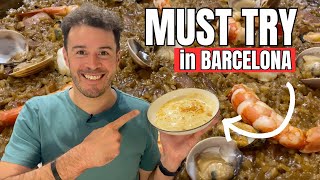
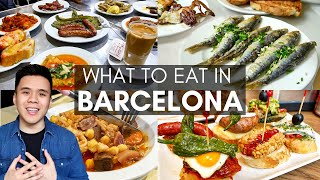
Catalan food is not interchangeable with Spanish food and the distinction matters. Pa amb tomàquet — bread rubbed with tomato and olive oil — arrives at tables instead of bread and butter and is the correct base. The Boqueria market on Las Ramblas is photogenic but over-touristed and overpriced; the Mercat de Santa Caterina in El Born and the Mercat de l’Abaceria in Gràcia are where locals actually buy food. Escalivada (roasted aubergine and peppers with olive oil) and fideuà (a Valencian-origin noodle paella popular here) are the dishes that distinguish Catalan tables from the rest of Spain. Cava — Catalan sparkling wine — is the correct local drink and costs a fraction of Champagne for comparable quality. A sit-down lunch at a local restaurant outside the tourist zone runs €13–16 for three courses; dinner in El Born runs €25–45 per person for a proper meal.
Neighbourhoods: El Born for architecture and the best restaurants; Gràcia for independent shops, neighbourhood feel, and a local demographic that has not yet been fully displaced by tourists; Eixample for central location and Modernista architecture on every block; Barceloneta for beach access at the cost of tourist density. Avoid staying on Las Ramblas or immediately adjacent to it — the location is convenient but the noise, the tourist-trap restaurants, and the pickpocket concentration make it a poor base. Hotel price bands: mid-range in El Born or Gràcia runs €110–170 per night; Eixample business hotels run €130–200; design hotels near the beach push €180–280 in high season.
The pickpocket situation is not exaggerated. Las Ramblas, the Gothic Quarter, and Barceloneta beach in summer are consistently flagged as high-risk in the corpus. Front-zip bags, inside pockets, and not putting phones on tables in outdoor cafés are the standard mitigations. The other consistent warning: Barceloneta beach in July and August is so crowded that it effectively stops being a beach and becomes a crowd-management exercise. Go in September or arrive before 10 a.m. in summer.
Day Trips
All 2 day trips videos →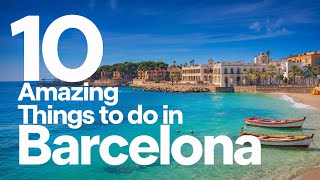
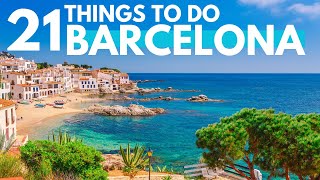
Itinerary
All 42 itinerary videos →
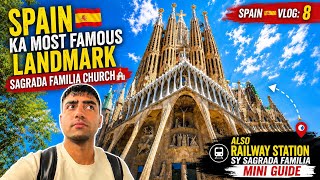
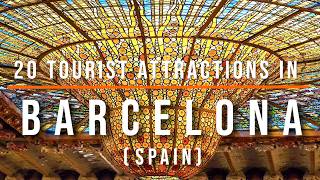
Traditional Culture
All 1 traditional culture videos →
Architecture
All 0 architecture videos →
Art & Museums
All 0 art & museums videos →Beaches
All 0 beaches videos →

Cuisine
All 0 cuisine videos →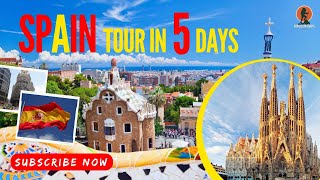
History
All 0 history videos →Markets
All 0 markets videos →Nightlife
All 0 nightlife videos →Other cities in Spain
Turn these videos into a Barcelona day-by-day plan.
Plan my days in Barcelona →