Seville: everything YouTube's best creators show you — sorted
31 videos across 11 topics, ranked by what's actually worth your time.
Seville makes the case for Andalucía in concentrated form. It is the city that produces flamenco in its most emotionally serious register, houses one of the finest Islamic palaces in the world in the Real Alcázar, and operates a tapas culture so embedded that going for drinks without food arriving alongside them is simply not how the city functions. It also has the largest Gothic cathedral on earth — the Catedral de Sevilla, where Christopher Columbus is buried — and a neighbourhood, the Barrio Santa Cruz, that functions as a labyrinth of whitewashed lanes, orange trees, and hidden courtyards in a way that photographs badly and rewards slow walking. The Triana neighbourhood across the Guadalquivir river is where the flamenco tradition actually lives: ceramic workshops, family-run tapas bars, and a Saturday morning market on the riverbank that the corpus flags consistently as one of the best in Spain. Spain divides by region; Seville is the one that has most clearly kept its own character against the tourist tide.

The timing constraint is severe. Seville in July and August is among the most extreme urban heat environments in Europe: temperatures of 40–44°C are normal, the city operates on a split schedule with a genuine shutdown between 2–6 p.m., and the tourist experience degrades significantly because most things worth doing are outdoors. March into June is the correct window. April specifically contains Semana Santa — Holy Week — when the city’s cofradías (brotherhoods) carry enormous floats through the streets in processions that run from Sunday night to the following Saturday. It is one of the great public spectacles in Europe and coincides with prices roughly doubling and accommodation booking out months in advance. The Feria de Abril — the spring fair — follows two weeks later: a week of flamenco dancing, horse parades, and casetas (private party tents) on a dedicated fairground across the river. Both are worth planning around if the dates align. October and November are the second-best window: warm but not hostile, and far less crowded.
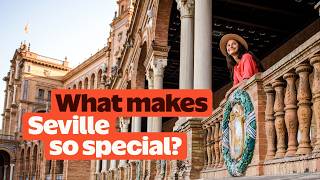
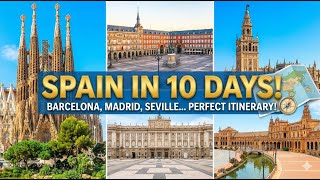
A two-to-three-day Seville itinerary: Day one morning, the Real Alcázar — book online (around €14.50 general admission) and arrive at 9.30 a.m. The palace is a Mudéjar masterpiece, built by Christian kings using Islamic craftsmen after the Reconquista, and the gardens alone require an hour. The cathedral is immediately adjacent; the Giralda tower (the former minaret) gives the best views in the city for €3 extra. Afternoon in the Barrio Santa Cruz — get lost deliberately, find a courtyard, and do not rush it. Day two: Triana in the morning, crossing the Puente de Isabel II on foot. The Mercado de Triana has fresh produce and a upstairs restaurant level for breakfast. A flamenco show in the evening — the Museo del Baile Flamenco in Santa Cruz offers solid regular performances, or ask the hotel for a tablao in Triana where the crowd is more local. Day three (if available): Plaza de España — the vast semicircular building from the 1929 Exposition, with tiled alcoves representing each Spanish province, is free to enter and best visited at 8–9 a.m. before the heat and crowds. Day trip to Córdoba (45 minutes by AVE) is easily inserted here.
Seville’s tapas culture has a specific operating logic. The standard circuit involves moving between three or four bars in an evening, ordering one or two tapas and a drink at each, and eating standing or perched on stools. The Alfalfa neighbourhood and the streets around Calle Betis in Triana are the correct environments for this. Dishes to navigate toward: salmorejo (a thicker, richer cousin of gazpacho, topped with egg and jamón), pringá (a slow-cooked meat filling served in small rolls), espinacas con garbanzos (spinach and chickpeas in a cumin-scented sauce), and boquerones en vinagre (white anchovies in vinegar). A full tapas evening for two with wine or beer runs €30–45. Sit-down restaurant dinner runs €35–55 per person. The menú del día at lunch is €12–15 and reliably excellent.
Neighbourhoods: Santa Cruz for the classic tourist experience, well-executed; Triana for a more local atmosphere and the flamenco tradition; El Arenal (between the cathedral and the river) for the bullfighting arena (the Plaza de Toros de la Maestranza, one of the oldest in Spain) and proximity to everything. Hotel price bands: mid-range in Santa Cruz or El Arenal runs €90–150 per night in shoulder season, €150–220 in Semana Santa and Feria.
Tourist traps: the horse-drawn carriage tours around the Parque de María Luisa charge €40–60 and cover ground you can walk in 20 minutes. The restaurants immediately surrounding the cathedral are expensive for what they deliver. And the flamenco shows marketed most aggressively to tourists are not where the real performances happen — ask locally or look for shows with a predominantly Spanish audience.
Day Trips
All 7 day trips videos →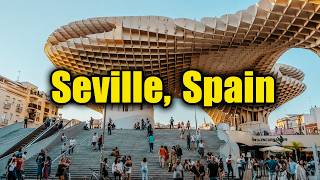

Hidden Gems
All 1 hidden gems videos →
Itinerary
All 12 itinerary videos →
Street Food
All 1 street food videos →![Street food in SEVILLE Spain, 🇪🇸 [Spanish food guide by a real Local] 🇪🇸](https://img.youtube.com/vi/qgzR48ZerWA/mqdefault.jpg)
Temples
All 1 temples videos →
Architecture
All 0 architecture videos →
Art & Museums
All 0 art & museums videos →
Cuisine
All 0 cuisine videos →
History
All 0 history videos →
Markets
All 0 markets videos →Nightlife
All 0 nightlife videos →Other cities in Spain
Turn these videos into a Seville day-by-day plan.
Plan my days in Seville →