San Sebastián: everything YouTube's best creators show you — sorted
22 videos across 9 topics, ranked by what's actually worth your time.
San Sebastián — Donostia in Basque — makes a single claim with unusual confidence: it is the best city in the world for food relative to its size. The numbers support the assertion. A city of 187,000 people holds more Michelin stars per capita than any city outside Japan and has produced three of Spain’s most influential chefs of the past three decades. But the argument for San Sebastián is not primarily about the Michelin restaurants. It is about the pintxos bars of the Old Town, where the standard of bar snack — a small composed plate of txangurro (spider crab), salt cod, grilled prawn, or slow-cooked beef — is high enough that a circuit of five or six bars constitutes a serious meal assembled piece by piece. The txikiteo, the Basque practice of moving from bar to bar ordering a pintxo and a small wine or cider at each, is the correct way to eat here and costs €25–40 per person for a full evening. Spain has a Basque Country that operates differently from the rest of the country; San Sebastián is its most refined expression.

July and August are the correct months for San Sebastián, which reverses the logic that applies almost everywhere else in Spain. The Basque coast receives Atlantic weather — rain, grey skies, and cool temperatures for most of the year — and summer is the window when La Concha beach, described by multiple creators as one of the most beautiful urban beaches in Europe, becomes usable. Temperatures in July and August reach 24–28°C, the bay fills with swimmers, and the evening light on the horseshoe bay from the Monte Urgull and Monte Igueldo headlands is genuinely beautiful. The Jazz Festival in late July draws significant crowds and requires advance hotel booking. The rest of the year San Sebastián is quieter, cooler, and the pintxos bars operate year-round — the food argument does not depend on the season.
A two-day itinerary: Day one is structured around the Old Town pintxos circuit. Start in the late afternoon (5–6 p.m. when bars put out fresh pintxos) on Calle 31 de Agosto and work through the grid of streets — Calle Mayor, Calle Fermín Calbetón, Calle Pescadería — hitting four or five bars and spending €4–7 per stop for a pintxo and a txakoli (the local slightly sparkling white wine) or a small beer. The correct rhythm is one round per bar; lingering at a single place misses the point of the circuit. Ganbara, Bar Nestor, and La Cuchara de San Telmo are the most frequently cited references, but the quality floor across the Old Town is high enough that improvising works. Day two: La Concha beach in the morning, then the Peine del Viento sculpture by Eduardo Chillida on the western headland (free, accessible by a coastal walk from the beach). The Miramar Palace gardens above the beach give views down the bay. Monte Igueldo by funicular (€4 return) for the best panoramic view of the city. If a restaurant booking is part of the plan, Arzak (four decades of three Michelin stars), Mugaritz, or Martín Berasategui require reservations made months in advance and budgets of €200–350 per person with wine.
The food vocabulary worth knowing: pintxos (not tapas — the distinction matters to locals); txakoli (the local white wine, slightly sparkling, poured from height to aerate it); idiazabal (smoked sheep’s cheese, the Basque cheese, available everywhere); kokotxas (cod cheeks in green sauce — the most characteristically Basque preparation); and marmitako (a tuna and potato stew, a fishermen’s dish that appears on traditional menus). The Mercado de la Bretxa in the Old Town is the covered market and the correct place to buy idiazabal and local produce.
Hotel price bands: San Sebastián is the most expensive city in this Spain collection outside Barcelona. Mid-range in or near the Old Town runs €140–220 per night in July and August; shoulder season drops this to €90–150. Book three months ahead for summer. The city is also easily visited as a day trip from Bilbao (1 hour by bus, €7) or as an overnight stop if a longer stay is not feasible — though the food circuit alone justifies two full days.
What most visitors get wrong: treating the Michelin restaurant scene as the point of the visit and missing the pintxos bars, which are the more characteristically Basque experience. Also: arriving hungry at lunchtime when many pintxos bars are at their weakest — the fresh pintxos go out in the late afternoon, and the evening circuit from 7 p.m. is when the city functions at its best.
Itinerary
All 2 itinerary videos →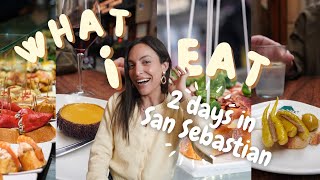

Temples
All 1 temples videos →
Architecture
All 0 architecture videos →Art & Museums
All 0 art & museums videos →
Beaches
All 0 beaches videos →

Cuisine
All 0 cuisine videos →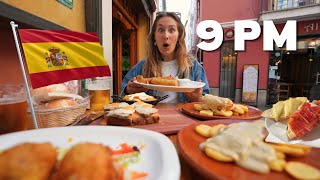

History
All 0 history videos →Markets
All 0 markets videos →Nightlife
All 0 nightlife videos →Other cities in Spain
Turn these videos into a San Sebastián day-by-day plan.
Plan my days in San Sebastián →