Málaga: everything YouTube's best creators show you — sorted
29 videos across 7 topics, ranked by what's actually worth your time.
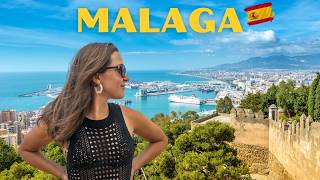
Málaga spent most of the past 40 years being misread as an airport and a transfer point — the place you fly into before taking a bus to Marbella or Nerja. That misreading is now sufficiently corrected that the corpus has more videos about the city centre than about anywhere else on the Costa del Sol. Málaga has the best street food scene in Andalucía after Seville, a genuinely excellent museum offer (the Picasso Museum, the Carmen Thyssen, and the Centre Pompidou Málaga constitute an unexpectedly serious art circuit), a Roman theatre and Moorish Alcazaba sitting directly adjacent in the city centre, and a waterfront regeneration — the Muelle Uno and Muelle Dos — that has turned former dockland into a walkable, restaurant-lined esplanade. It is also, by some measures, the sunniest city in Europe, with over 300 days of sunshine annually and a mild winter (average January temperature 13°C) that makes it a functional destination year-round. Spain has a Mediterranean coast; Málaga is the point where the Costa del Sol becomes a proper city rather than a resort strip.

The best months are April through June and September through November. Summer (July–August) is hot — 32–36°C — but the coastal breeze keeps it below the extremity of inland Andalucía, and the city is livelier with more visitors without becoming unmanageable. Winter is genuinely mild and the museums are quiet; Málaga works as a city break in January or February when most of northern Europe is grey and cold. The Semana Santa processions in Málaga are rated by multiple creators as among the most atmospheric in Andalucía after Seville.
A two-day itinerary: Day one, the Alcazaba in the morning — the 11th-century Moorish fortress built into the hillside above the Roman theatre (both visible from the entrance, around €3.50 combined ticket). The Castillo de Gibralfaro above the Alcazaba adds another 30 minutes of walking and the best views across the city and bay. Lunch in the Mercado de Atarazanas — the covered market in the city centre, with a spectacular 14th-century Moorish gateway at the entrance and a row of tapas bars inside doing fresh seafood. The Picasso Museum in the afternoon (€12 permanent collection; born in Málaga in 1881, Picasso left at age 10 and never returned, but the family home is preserved as a separate museum, Casa Natal Picasso, free entry). Evening on Calle Larios — the pedestrian main street — and dinner in the Soho district south of the city centre, where the restaurant and bar density is highest. Day two: the Centre Pompidou Málaga (the only Pompidou branch outside France, in a striking glass cube on the waterfront, €9) in the morning. The Carmen Thyssen in the afternoon (€13, focused on 19th-century Andalucían painting — a more coherent collection than the name suggests). Walk the Muelle Uno waterfront in the late afternoon; the views back to the city with the Alcazaba on the hill are the defining visual of Málaga. Day trip options: Nerja (1 hour by bus, €4) for the Nerja Caves and a more attractive beach town; Frigiliana (30 minutes from Nerja by taxi) for a well-preserved white village in the hills.
Málaga’s food identity has sharpened significantly in the past decade. Espetos — sardines skewered on cane reeds and grilled over open fires on the beach — are the city’s signature dish and available from the chiringuitos (beach restaurants) along the Playa de la Malagueta and the beaches east of the centre. Ajoblanco — a cold almond and garlic soup, a precursor to gazpacho — is the local summer dish. Fritura malagueña — a mixed fry of small fish (anchovies, squid, red mullet) — is the correct fish order in any traditional bar. The sweet wines from the Málaga DO (particularly the Moscatel) are available by the glass in traditional bars and are worth trying. A full meal at a good restaurant outside the tourist zone runs €20–35 per person.
Hotel price bands: Málaga centre runs €70–130 per night for mid-range; design hotels near the Soho district and waterfront run €100–170. Cheaper in winter (€50–90 for mid-range), when the city is quieter and the weather still very pleasant by northern European standards.
The clearest tourist trap: eating at the restaurants directly on Muelle Uno, which are expensive and generic. One street back, the food quality doubles and the price drops by a third. The other consistent note: the beaches immediately in front of the city centre (Playa de la Malagueta) are functional but not the reason to come here — the beaches east of the centre at El Palo and Pedregalejo are where locals swim and where the best espeto chiringuitos operate.
Architecture
All 0 architecture videos →
Art & Museums
All 0 art & museums videos →


Beaches
All 0 beaches videos →

Cuisine
All 0 cuisine videos →


History
All 0 history videos →

Markets
All 0 markets videos →Nightlife
All 0 nightlife videos →Other cities in Spain
Turn these videos into a Málaga day-by-day plan.
Plan my days in Málaga →