Secondary School Study Skills
Study skills for ages 12–15: time management, note-taking systems, active reading, exam prep, test anxiety, and project workflow.
Free, always · No sign-upFrom the channels students actually rate — not from the SEO sludge that owns the search results.
The 6 courses in this track — in the order most students need them
Active Reading
Active reading techniques for secondary school students — annotation, SQ3R, paragraph summarising, and extracting arguments from dense …
See the course →Exam Preparation Basics
Evidence-backed exam revision for secondary school: retrieval practice, spaced scheduling, past papers, and planning a revision timetable.
See the course →Note-Taking Systems
Cornell notes and mind maps explained for secondary school students — when to use each, how to set them up, and how to turn notes into …
See the course →Project Workflow
Manage multi-week school projects from brief to submission — breaking down tasks, setting internal deadlines, drafting, and avoiding common …
See the course →Test Anxiety
Understanding and managing test anxiety for secondary school students — physiological responses, reframing techniques, and pre-exam …
See the course →Time Management for Teens
Practical time management for secondary school students — weekly planning, prioritising homework, and balancing study with other …
See the course →Who this track is for
Students in secondary school, roughly ages 12 to 15 — Year 7 to Year 10 in the English system, equivalent to middle school and early high school elsewhere. This is the transition point where study habits stop being primarily parent-managed and start needing to be student-owned. The workload increases sharply at this stage: more subjects, longer pieces of independent writing, and assessments that carry real weight. Students who arrive at Year 10 without reliable revision and organisation habits are the ones who panic in Year 11.
The courses here are pitched at the student directly, not the parent. A 13-year-old can watch a 15-minute explanation of the Cornell note-taking system and implement it the same afternoon. Parents and teachers are welcome to use these resources, but the target is the student who wants to understand why certain techniques work, not just follow instructions.
What actually changes at this age
Secondary school introduces a cognitive load problem that primary school largely avoided: multiple subjects, multiple teachers, multiple assessment formats, all running simultaneously. Primary learning was mostly additive — you built on a small number of skills across the week. Secondary learning is parallel. On any given day a Year 8 student might need to absorb new science content, produce a geography annotation, prepare for a French vocab test, and draft a personal response to a novel. None of those tasks is individually difficult. The difficulty is the juggling, and no one explicitly teaches that.
 How to Prepare for an Exam
 how to take notes like the top 1% of students
 How to Define a Workflow Process - Project Management Training
Working memory research suggests that students in this age band are also navigating a period of significant neural reorganisation. The prefrontal cortex — which is responsible for planning, prioritising, and resisting distraction — is still developing well into the mid-twenties. This is not an excuse for disorganisation; it is an explanation for why purely willpower-based approaches to study (“just sit down and focus”) fail reliably at this age, and why external structure — a written plan, a set location, a fixed time — produces better outcomes than waiting for motivation to arrive.
What schools and parents get wrong at this stage
The most common failure mode is passive revision disguised as active work. Re-reading notes, copying out key terms, and highlighting textbook passages all feel productive because they require effort and fill time. None of them produce durable learning in isolation. The cognitive science on this is unambiguous: retrieval practice — trying to recall information without looking at it — is substantially more effective than any review activity that involves looking at the answer while “studying”. Most secondary students have never been explicitly taught this distinction. They revise hard in formats that feel good and then underperform in exams, and neither they nor their parents understand why.
A related error is conflating completion with understanding. Getting to the bottom of a worksheet is not the same as knowing the material on it. “Finishing homework” is an understandable goal, but it orients effort toward speed and completion rather than toward the question of what has actually been retained. Students who adopt a test-yourself habit — covering the answer column and trying to recall the answer before uncovering it — consistently outperform students who read and re-read, even with the same amount of time spent. This track covers that shift in detail, because it is the highest-leverage change most students in this age band can make.
The 6 courses in this track
Time Management for Teens Specific to the secondary school context: managing multiple subjects, homework deadlines, and extracurricular commitments simultaneously. Covers weekly planning, the difference between urgent and important tasks, and why “I’ll do it later” is structurally different from a written plan.
Note-Taking Systems Two systems explained and compared: the Cornell method (main notes, cues, summary) and mind maps. Neither is universally superior — the choice depends on the subject and the student. What matters is that the student has at least one structured system rather than transcribing everything verbatim.
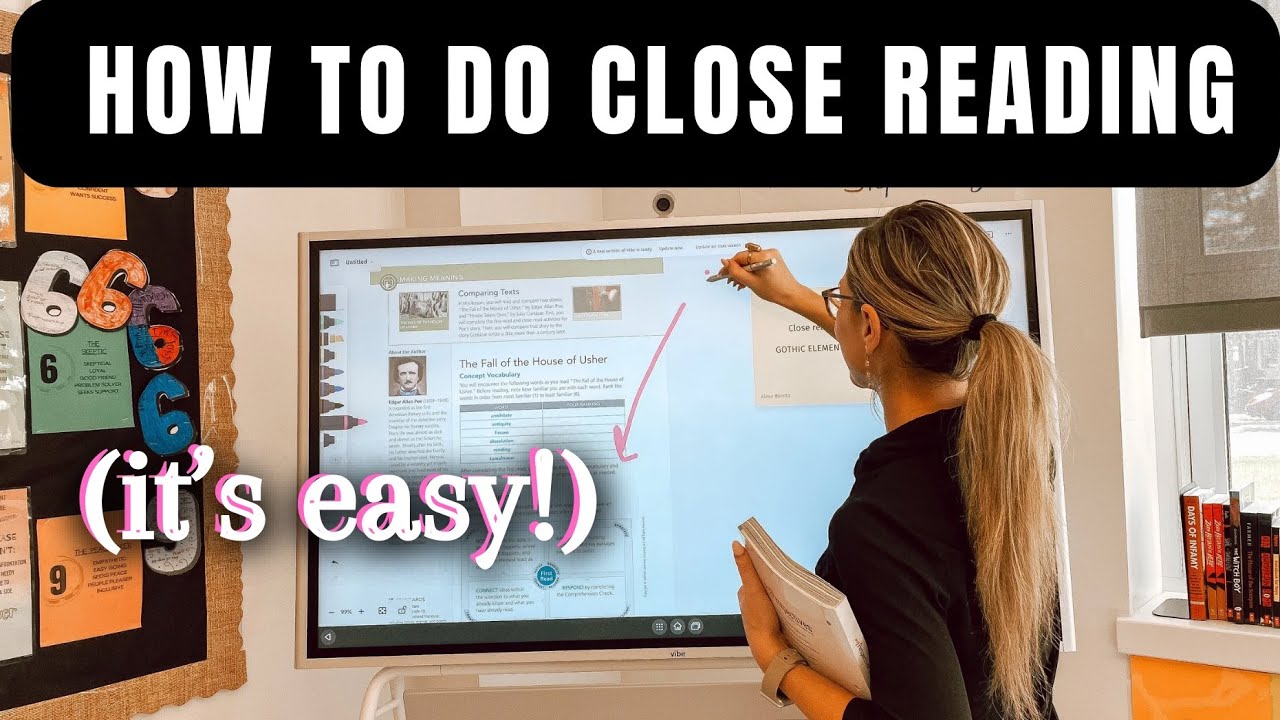
Active Reading Secondary school reading is not primary school reading. Textbooks are dense, non-fiction, and often poorly written. Active reading techniques — annotating margins, converting paragraphs to summary bullets, identifying the main claim per section — are the difference between reading and learning.
Exam Preparation Basics Covers the fundamentals of revision that apply regardless of subject: retrieval practice over re-reading, spaced scheduling over last-night cramming, and past papers as diagnostic tools rather than performance tests. This is the most evidence-backed course in the track.
Test Anxiety Addresses the physiological and psychological components of exam stress directly. Covers breathing techniques, how to interpret anxiety symptoms accurately, pre-exam routines that help, and what to do when the mind goes blank mid-paper.
Project Workflow How to manage a multi-week project from brief to submission without leaving everything to the last three days. Covers breaking down a brief, setting internal milestones, first-draft discipline, and the specific failure mode of research rabbit holes.