Machu Picchu: everything YouTube's best creators show you — sorted
0 videos across 7 topics, ranked by what's actually worth your time.
The crown jewel, with caveats
Machu Picchu is the reason most travellers come to Peru, and the corpus treats it accordingly — “the crown jewel of Peru, what you’ve been waiting for” is the standard framing [via Peru in 7 Days]. The catch is that the citadel itself is a half-day visit attached to a two-day logistical operation: train tickets, bus queues, an overnight in a valley town built for tourist throughput, and an altitude profile that catches people out. The site rewards the planning, but the planning is the point. Read it as a structured pilgrimage, not a drop-in.

What’s here
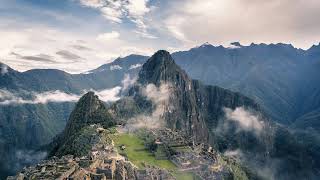
The citadel sits at roughly 8,000 feet on a ridge above the Urubamba river, and most creators converge on a small set of named features inside the ruins themselves: the Intihuatana stone, the Temple of the Sun, the Sun Gate for the panoramic view back across the terraces, and the Temple of the Condor on the lower levels [via 12 Best Places]. The terraced agriculture and the carved-stone water channels are what the longer-form videos linger on — the engineering, not just the silhouette [via 10 Best Places]. Above the main site, Huayna Picchu mountain offers what one creator calls “a thrilling vantage point” for those willing to do the early-morning climb, with permits sold separately and limited daily [via 12 Best Places].
The Inca Trail is the alternative arrival route — roughly 40 kilometres over four days through woods, valleys and original Inca paths, finishing at the Sun Gate at dawn [via Amazing Places to Visit]. Most travellers do not do this; they take the train. The base town, Aguas Calientes (also called Machu Picchu Pueblo), is where you sleep, eat and queue for the shuttle bus up to the ruins [via Peru in 7 Days]. It is a narrow valley town wedged against the river, dense with restaurants and hostels, with the train tracks running through the middle of it [via Top Things To Do in Aguas].
When to go and how to eat
The dry season runs roughly May to September and is when both the trail and the citadel are most reliably visitable; bookings should be made well in advance, especially for the Inca Trail permits and the Huayna Picchu add-on. One thing that surprises arrivals: Machu Picchu itself is lower than Cusco — about 8,000 feet versus Cusco’s 11,000 — so the standard advice from the corpus is to descend to Aguas Calientes early in the trip to acclimatise before going back up to Cusco later [via 14 Things to Know]. This inverts how most itineraries read on paper.
Food in Aguas Calientes is functional rather than memorable, and creators are unusually candid about this. The standard recommendation is to pick a restaurant close to the train station so the post-citadel logistics stay simple [via Peru in 7 Days]. Italian-leaning options like the Taiwa restaurant cafe and Toto’s pizza-and-lasagna spots come up as reliable picks for travellers who want something familiar before or after the early-morning site visit [via Top Things To Do in Aguas]. One creator warns that food options in the Machu Picchu area become “extremely limited” relative to Lima or even Cusco, and recommends stocking up on snacks before the trip up [via THE ONLY PERU TRAVEL]. Lomo saltado and quinoa soup are the dishes most consistently flagged as the local order [via 12 Best Places].
Pace and what to skip
The train-versus-trail decision is the structural choice. The trail is a four-day commitment with permit limits and a fitness floor; the train from Ollantaytambo gets you to Aguas Calientes in a few hours with panoramic windows that one creator singles out as “a really fun experience” in its own right [via Peru Travel Adventure]. The combination move worth knowing: pair the ‘Peru in 7 Days’ video with the ‘Top Things To Do in Aguas Calientes’ guide — the former gives you the rhythm of where Machu Picchu sits in a wider Peru trip (Cusco, Sacred Valley, Amazon), and the latter answers the narrower question of how to spend the half-day before or after the ruins themselves without wasting it.
The day-trip-from-Cusco option exists but the consensus is against it. Sleeping in Aguas Calientes lets you catch the first bus up and beat the crowds before the Cusco day-trippers arrive [via Peru in 10 Days]. What this means in practice: one overnight in Aguas Calientes, the citadel at sunrise, lunch by the train station, afternoon train back. Skip the rush back to Cusco on the same evening unless your schedule forces it.
Beaches
All 1 beaches videos →
Day Trips
All 2 day trips videos →

Itinerary
All 18 itinerary videos →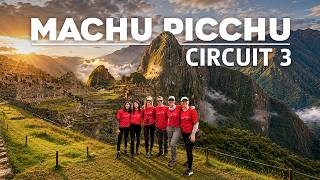


Museums
All 2 museums videos →

Hiking
All 0 hiking videos →Logistics
All 0 logistics videos →Photography
All 0 photography videos →Other cities in Peru
Turn these videos into a Machu Picchu day-by-day plan.
Plan my days in Machu Picchu →