Kanazawa: everything YouTube's best creators show you — sorted
17 videos across 4 topics, ranked by what's actually worth your time.
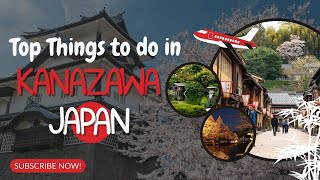
Kanazawa earns the “little Kyoto” comparison because it survived the Second World War intact — one of very few major Japanese cities where that is true. What that actually means in practice: genuine Edo-period streets rather than reconstructions, working geisha culture that predates mass tourism, and a gold-leaf craft industry that supplies over 99% of Japan’s output. The proposition here is denser heritage per block than almost anywhere else on the Honshu corridor.

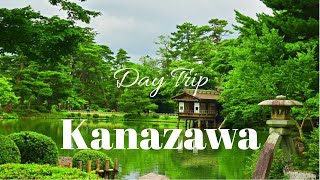
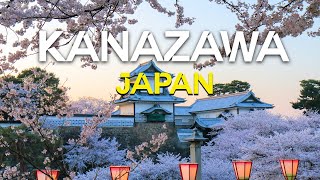
The city organises itself around a compact central core that most travellers cover on foot, supplemented by an IC-card bus network for outlying sites. Kanazawa Castle and the adjacent Kenroku-en Garden anchor the middle — Kenroku-en is officially ranked among Japan’s top three landscape gardens, and its scale rewards an early morning start before coach groups arrive.
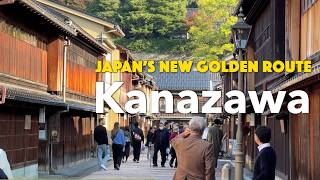
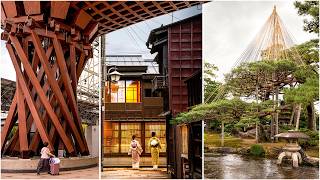
North of the castle, the Higashi Chaya district is the most legible of the city’s three historic tea-house quarters. The preserved wooden facades line narrow lanes where Kanazawa’s geisha still perform; note that photography rules are identical to Kyoto’s Gion — a polite refusal is the expected response to pointing a lens at anyone in formal dress. Several buildings have been converted into restaurants and shops without losing their streetscape coherence.
The former samurai residential areas offer a quieter circuit and give a clear sense of how elite households lived during the feudal period. For the contemporary side, the 21st Century Museum of Contemporary Art is large enough to occupy two to three hours; its permanent free-access courtyard works are worth a loop even if you skip the paid exhibitions.
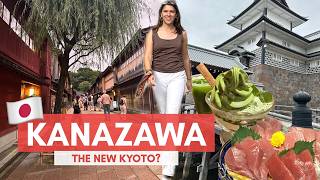
Omicho Market sits between the castle and the station and functions as the practical seafood hub — fresh catches, local produce, and a place to eat a bowl of something before the sights absorb the rest of the day.
The consensus across multiple creators is that spring and autumn deliver the best conditions: Kenroku-en’s cherry blossoms in late March to early April, and autumn foliage that intensifies the garden’s composed geometry. Summer is manageable and considerably less crowded than Kyoto. Winter brings heavy Sea of Japan snowfall — atmospheric for photographs but demanding in terms of logistics.
The food story in Kanazawa runs through seafood in a way that sets it apart from the inland cities. Sushi here draws on the Sea of Japan catch rather than the Pacific, meaning different shellfish and different flavour profiles. One creator visited a small family-run sushi counter, Sushi Ippei, where the owner specifically pointed to a local shellfish species she described as exclusive to Kanazawa — the kind of detail that no menu elsewhere carries.
Gold leaf is the city’s other defining food moment. The soft-serve at Hakuichi, just outside Kenroku-en, is wrapped in an edible gold sheet — a minor spectacle that multiple creators note is not as gimmicky as it sounds. Given that Kanazawa produces 99% of Japan’s gold leaf, the presentation has a local logic to it rather than being manufactured for tourists.
Two full days is the figure that multiple itinerary creators converge on for Kanazawa proper, with a third day available for a side trip. The Takayama-to- Kanazawa express bus runs at roughly two hours and is bookable online, making the Kanazawa–Takayama–Shirakawa-go triangle a practical three-to- four-day sub-circuit.
Skip the standard move of rushing Kenroku-en as a one-hour tick-box: the garden rewards a slower pace, and arriving before 9 a.m. removes most of the crowd pressure that afternoon visitors complain about. The Higashi Chaya district is genuinely worth an evening return as well as a daytime visit — the lantern-lit lanes after dark carry a different quality.
The “2 Perfect Weeks in Japan” video is the most practically useful single resource here: it sequences Kanazawa across a full day, distinguishes the three chaya districts by character, and covers the gold-leaf ice cream stop with enough context to understand why it matters. The IuTDuvYr7f0 video complements it directly — same sites, different pace, stronger on food specifics including the Sushi Ippei counter and the Omicho Market approach. Watch the former for the day structure, then use the latter to fill in the eating decisions. Together they cover what a three-day stay actually requires.
Architecture
All 3 architecture videos →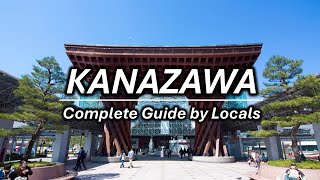
Cuisine
All 3 cuisine videos →
Hidden Gems
All 5 hidden gems videos →
Traditional Culture
All 6 traditional culture videos →


Other cities in Japan
Turn these videos into a Kanazawa day-by-day plan.
Plan my days in Kanazawa →