Kyoto: everything YouTube's best creators show you — sorted
36 videos across 7 topics, ranked by what's actually worth your time.
Kyoto’s proposition is not “ancient Japan preserved” — it is ancient Japan actively practised. Geisha still train in Gion, Nishiki Market vendors have operated for generations, and the city’s Buddhist and Shinto institutions function, not just perform. Importantly, none of this is effortless to access: crowds are severe by mid-morning, and the difference between a frustrating day and a rewarding one comes down almost entirely to timing.
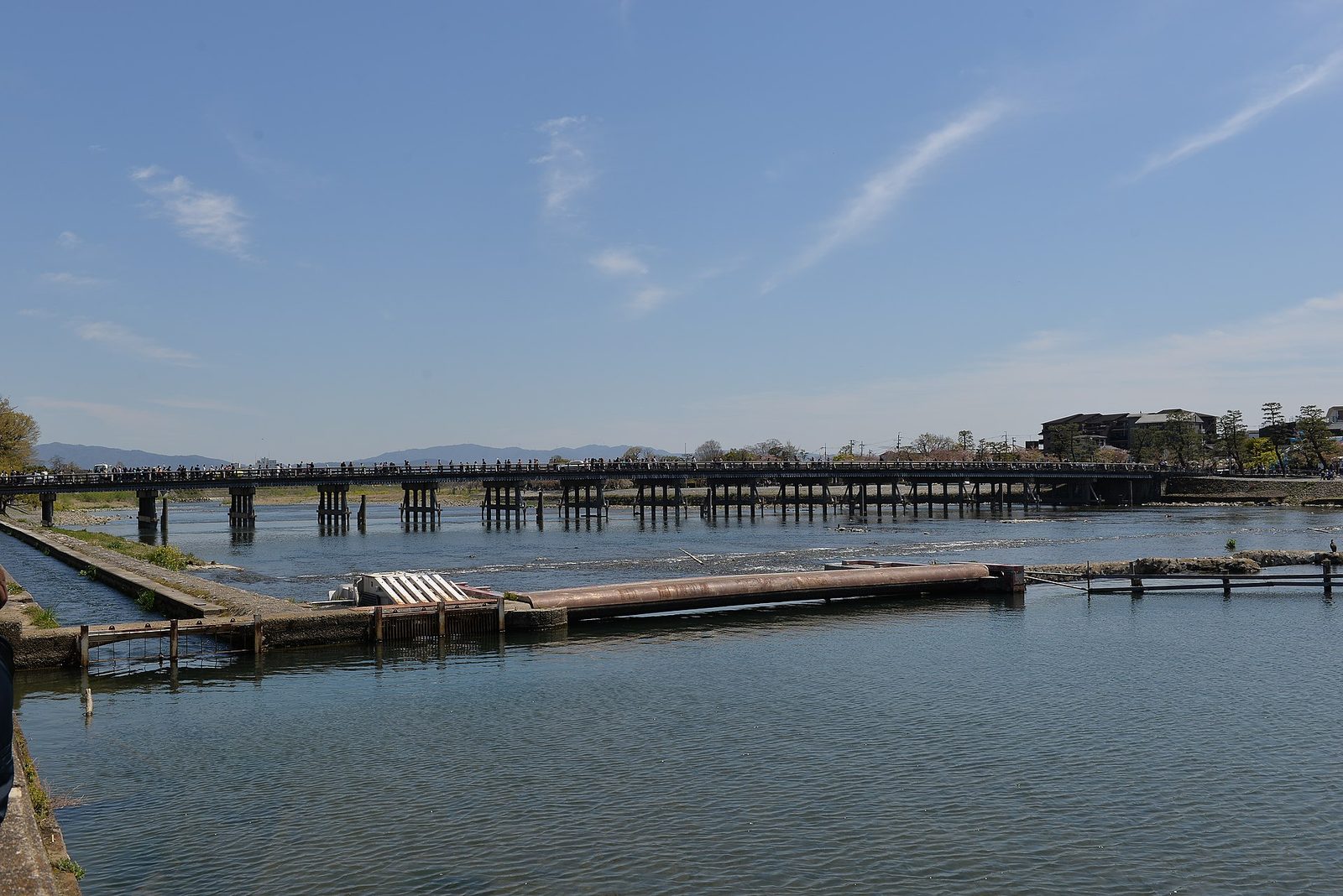
Kyoto organises itself into distinct zones that reward treating each as a separate project rather than trying to sweep all of them in a single day.
Eastern Higashiyama is the most photogenic stretch, running from Kiyomizu temple down through the Ninenzaka lanes to Gion — one creator notes you could spend a full week in this eastern corridor alone. Hanamikoji street in Gion is where tea houses operate and where a working geisha is occasionally visible; residents have put up notices banning photography on private-looking side streets, and fines apply.
Central Kyoto is anchored by Nishiki Market — over 100 shops in a single covered arcade, selling pickles, seafood, sweets, and Kyoto produce [via ULTIMATE 10 DAY]. The standard tourist move is to treat it as a snack walk, but at least one creator flags it as a potential tourist trap and recommends arriving with specific stalls in mind. Pontocho, a narrow lit-up alleyway parallel to Nishiki, is the evening counterpart — dozens of restaurants and bars in a single lane.
To the north-west, the Philosopher’s Path connects Higashiyama to Okazaki; the Heian Jingu shrine and the Okazaki rabbit shrine sit close by as quieter detours.
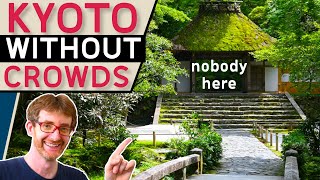
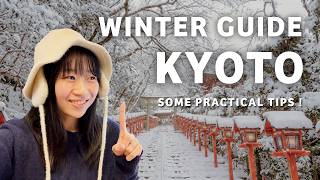
Multiple creators converge on a single timing insight: the window before 8 AM and after dinner separates a rewarding Kyoto from the version most tourists experience — shrines and narrow alleys calm down significantly once the crowd schedule lifts. No single season dominates the corpus, though one creator’s winter itinerary treats Kyoto as a functioning destination well outside the autumn-leaf peak.
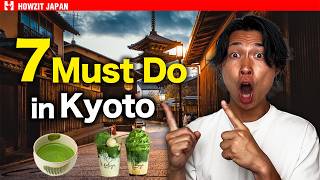
Kyoto’s food identity is distinct from Tokyo’s. The defining local speciality is yuba — tofu skin — served in forms from a simple side to a yuba-and-cheese skewer at Nishiki stalls. A Kyoto local recommends Sugari restaurant in central Kyoto for fish-based thick ramen, singling out the beef intestine variant. For matcha, the relevant geography is Uji — a town in Kyoto prefecture where the tea is grown — making a matcha latte there a grounded choice. Evening eating in Gion means kaiseki: multi-course meals, at least one creator noting a family-friendly tour option exists. Nita Bakery, a neighbourhood spot, covers the early-morning pastry slot.
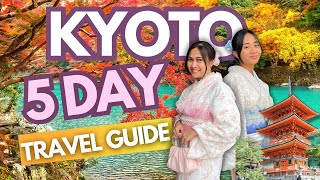
Three to four days is the consensus floor — one creator structures a full video around four days and still leaves material out. A Nara day trip fits naturally: roughly one hour by train from Kyoto Station.
The standard mistake is treating Kyoto as a ranked shrine-and-temple checklist. Skip that framing — pick one zone per day rather than one landmark per hour.
The “38 Tips” video is the most systematic reframe of crowd logic — watch it before arrival, not mid-trip. Pair it with the “KYOTO Local Food Guide”, which maps 14 eating spots with prices, to settle the two decisions that most often derail a Kyoto trip: when to be where, and where to eat. The remaining videos below cover Gion’s night-time restaurant scene, the Nishiki trade-offs, and the Michelin end of the food spectrum.

Architecture
All 6 architecture videos →

Cuisine
All 4 cuisine videos →
Day Trips
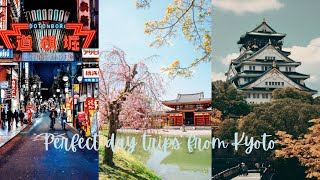
All 5 day trips videos →


Itinerary
All 1 itinerary videos →
Nature
All 4 nature videos →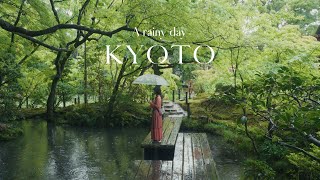

Temples
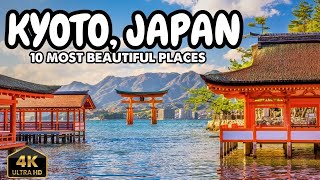
All 12 temples videos →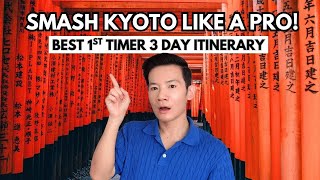
Traditional Culture
All 4 traditional culture videos →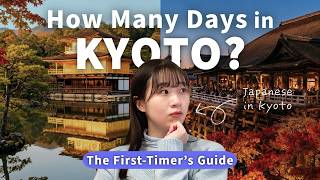
Other cities in Japan
Turn these videos into a Kyoto day-by-day plan.
Plan my days in Kyoto →