🇯🇵The complete Japan watch-list
490 curated videos. One plan before you go.
Flights to Japan
videos
Japan eSIM Guide
videos
Travel Insurance for Japan
videos
Fukuoka
20 videos
Cuisine · Day Trips · Nightlife
Hakone
22 videos
Budget Tips · Day Trips · Nature
Hiroshima
24 videos
Architecture · Day Trips · Itinerary
Japan’s most useful attribute is density: Tokyo holds more Michelin-starred restaurants than any other city in the world, Shinkansen departures run to the exact second, and convenience stores stock freshly made onigiri that rival café food elsewhere. Bad meals and wasted transit time are rarer than anywhere. One creator notes the language barrier dissolves faster than expected — ordering machines with pictures, attentive staff, and transit maps handle situations. Japan rewards a tighter itinerary than travellers assume. Understanding the country’s geography before you arrive — knowing which cities connect and what each one is for — separates an efficient trip from an exhausting one.
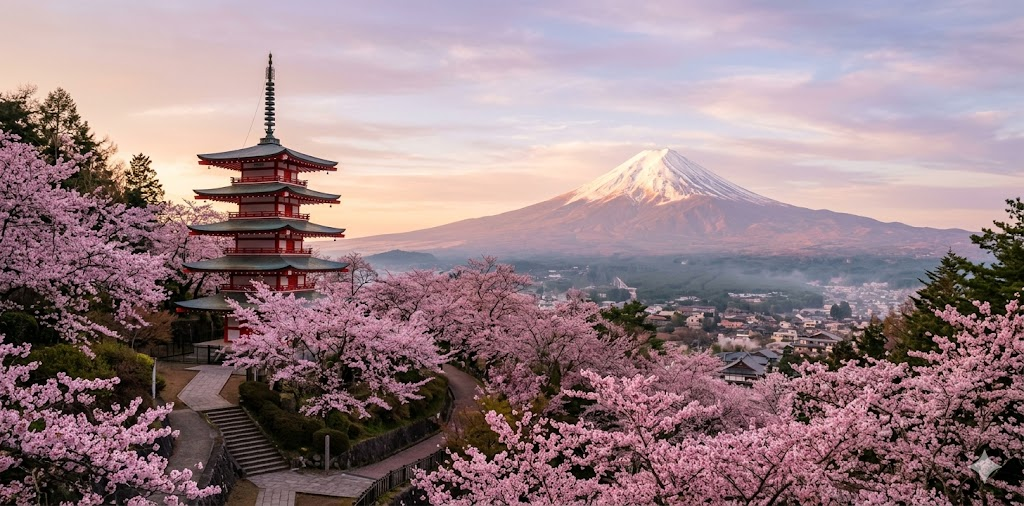
Tokyo is the entry point for most travellers. Shinjuku Station is the busiest in the world, yet the metro is clean and nearly silent. Shibuya Crossing moves over 300 people per second at peak signal changes. Memory Lane (Omoide Yokocho) in Shinjuku packs tiny izakaya bars into a narrow alley popular with the after-work crowd. West of the capital, Hakone provides Onsen respite and clear views of Mount Fuji — most creators absorb it over two nights. Kyoto compresses traditional Japan: Fushimi Inari Shrine runs thousands of orange torii gates up a forested hillside, and Kinkakuji sits gold-leafed above a mirror pond. Going early (before 8 a.m.) is the single most consistent creator tip — both sites are crowded by mid-morning. Osaka announces itself through Dotonbori’s LED billboards and building-mounted mechanical crabs; the city also gave Japan takoyaki and okonomiyaki. In the south, Okinawa offers Caribbean-blue water, Ryukyuan culture distinct from mainland Japan, and Shurijo Castle.
March to early April or October to mid-November are the windows most creators converge on. Both avoid domestic holiday peaks without sacrificing stable weather. Skip summer entirely. Heat and humidity force most sightseeing into night hours, and one creator describes the combined effect as impossible to sustain outdoors for any length of time. Golden Week (late April to early May) and the Obon period in August push domestic tourists into major cities, crowding restaurants and straining hotels. Spring cherry blossoms require careful timing — they bloom for only a couple of weeks and can disappear days early after rain or temperature shifts. Winter is not a deterrent if you commit to it. Nikko’s frozen waterfalls and UNESCO shrines reward cold-weather visits, and Hakone’s hot springs justify themselves most in low temperatures. Note that national holidays cluster unpredictably, and arriving during one means restaurant hours shift and queues lengthen.
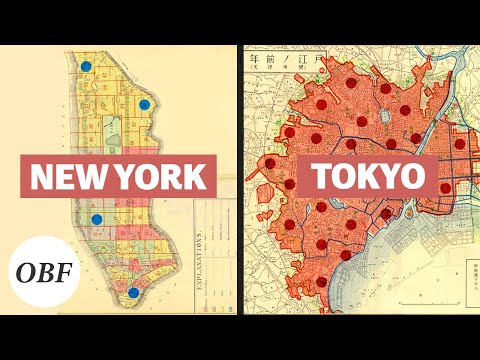 Why Tokyo Is Insanely Well Designed
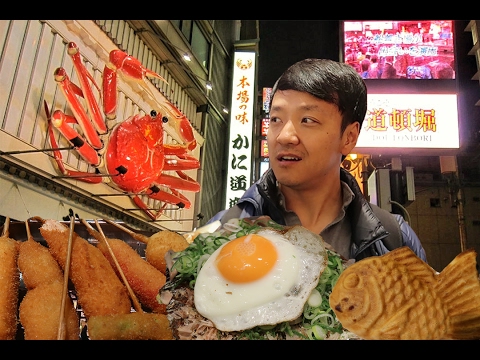 Osaka Japan Street Food Tour! Dotonbori Food Guide
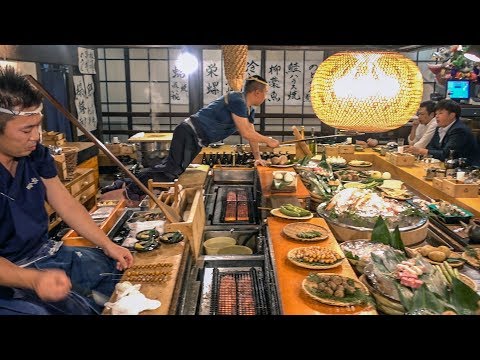 5 Must-Try Japanese Food Experiences in Tokyo
The “10 Foods YOU MUST” video works as a primer — useful for understanding conveyor-belt versus standing-sushi counter dynamics. An eel nigiri at a market stall runs around 400 yen; standing sushi counters charge a fraction of sit-down restaurants; and the freshness gap is noted as meaningful. Osaka is the food capital by consensus. Takoyaki, okonomiyaki, and udon originate here, and locals eat out so frequently that kuidaore — “eat until you drop” — is the city’s operating philosophy. Kiosk-ordering machines are standard in casual restaurants and lack English menus; pointing at pictures or a translation app handles situations. Pair “I Went to the Best Street” with “7 MUST EAT Restaurants” — the former captures Dotonbori at stall level, the latter adds restaurant picks and specialist menus; together they cover Osaka from street spontaneity to planned booking. Tokyo’s convenience stores deserve more credit than they receive: 7-Eleven workers make onigiri fresh in-store, and travellers run their breakfasts through kombini.
Two weeks is clearly the better choice over one. The “Japan trip EVERYONE does” video gives a one-week skeleton: two days Tokyo, two days Kyoto, one day Osaka, one day Nara, one final Tokyo day — a lean sequence that works as a minimum but leaves no room for pace variation. The 14-day format opens Hakone and at least one rural side trip without forcing daily double-moves. The “FIRST TIME travel” video extends this to 21 days, adding Nagano and Shirakawa-go — useful for the rural Japan angle, though lighter on food specifics. Note that Shirakawa-go reads as a full day’s journey, not a passing stop. On transport: obtain the Japan Rail Pass before departure if you are visiting more than two cities. Load Suica digitally via Apple Pay for metro and kombini purchases — it does not cover Shinkansen separately. Your first day anywhere should stay light: drop luggage, walk without a plan, absorb the neighbourhood before switching to itinerary mode.
“How to Actually Plan” is the one to watch before booking anything — it filters timing errors (Golden Week, summer humidity, national holidays) that itinerary videos skip entirely, though lighter on specific attractions. “How to Spend 14 Days” maps daily pacing across a full two-week trip — useful as a structural skeleton, less strong on food specifics. Pair “The ULTIMATE 7 Day” with “Our Two Week Trip” — the former gives a compressed first-timer’s route with priorities, the latter adds honest reflection on what mattered; together they calibrate expectations across first and return trips. The “21 Things to do When You Arrive” video fills arrival-day gaps — jet lag recovery, transport setup, first-night food — that longer itinerary videos overlook.
Japan Overview
187 videos
Budget Tips · Cuisine · Day Trips
Recommended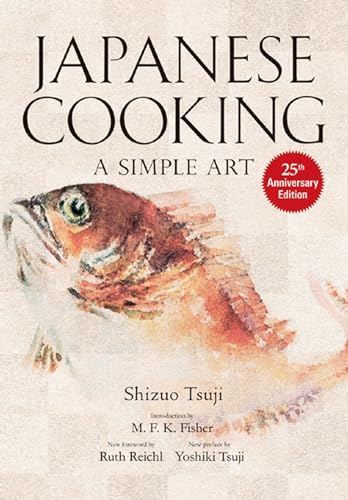 Japanese Cooking: A Simple Art
Check price on Amazon AU →
Japanese Cooking: A Simple Art
Check price on Amazon AU →
Kanazawa
17 videos
Architecture · Cuisine · Hidden Gems
Kyoto
36 videos
Architecture · Cuisine · Day Trips
Nara
23 videos
Nature · Temples · Traditional Culture
Nikko
15 videos
Day Trips · Nature · Temples
Osaka
32 videos
Cuisine · Day Trips · Itinerary
Sapporo
21 videos
Cuisine · Itinerary · Nature
Takayama
18 videos
Cuisine · Hidden Gems · Traditional Culture
Tokyo
61 videos
Architecture · Cuisine · Day Trips
Yakushima
14 videos
Hidden Gems · Nature
More destinations
Want a Japan itinerary built around what you've watched?
Plan my Japan trip →